

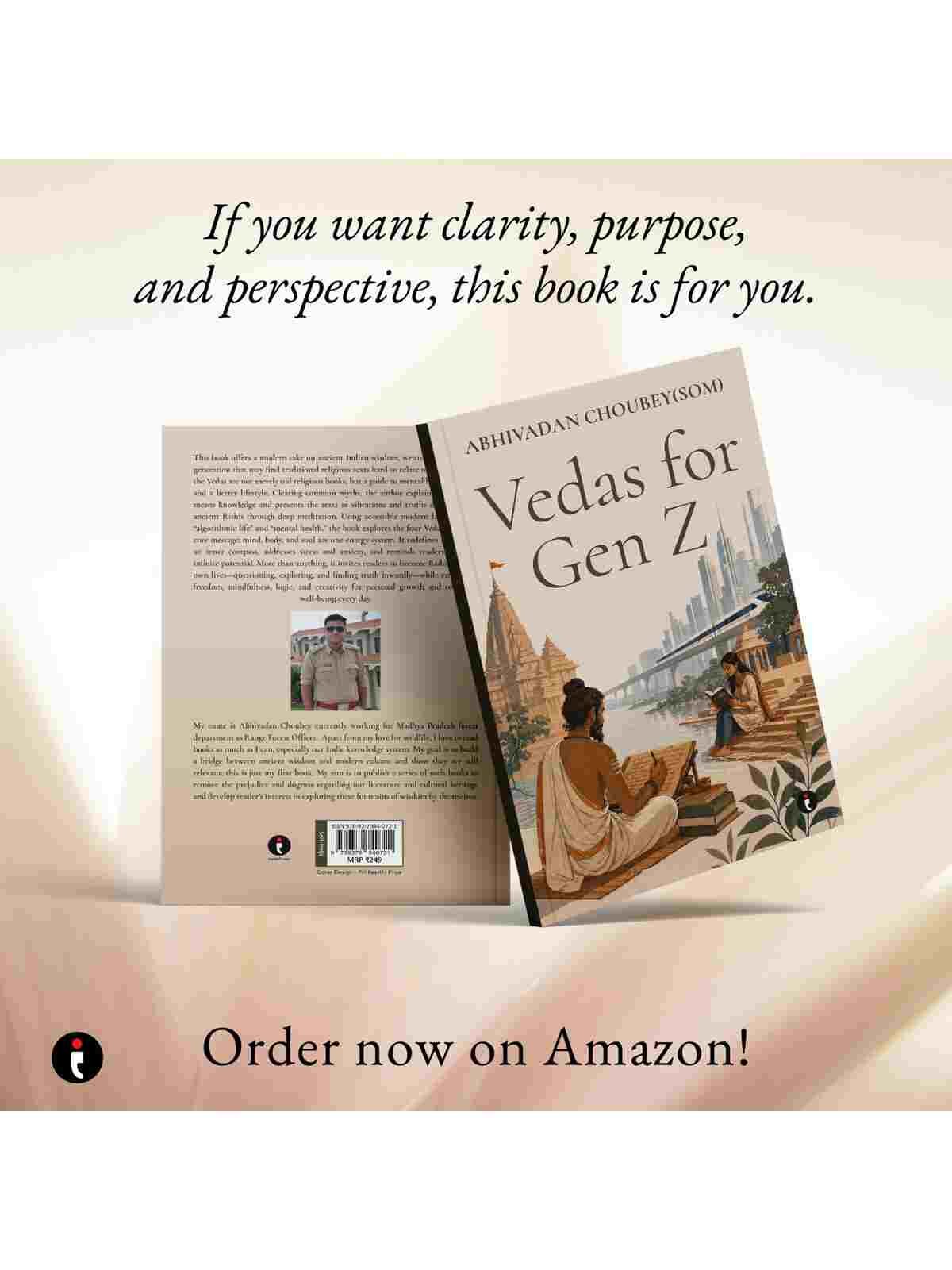
Vedas for GenZ reimagines the timeless wisdom of the Vedas for today’s generation, presenting ancient Indian philosophy in a language that is practical, relatable, and easy to understand. Rather than viewing the Vedas as religious texts alone, the book explores them as a source of knowledge for mental well-being, self-awareness, and purposeful living. Through modern concepts such as mindfulness, mental health, and personal growth, author Abhivadan Choubey explains ideas like Dharma, consciousness, and the unity of mind, body, and soul. Vedas for GenZ encourages readers to question, explore, and discover timeless principles that can inspire a more balanced and meaningful life.
Q1. What inspired you to write this particular book, and how did the idea for the story come to you?
I have always been fascinated by the timeless wisdom contained in the Vedas and wanted to make it accessible to a younger generation. Many people view these texts as difficult or purely religious, but I believe they contain practical knowledge about life, mental well-being, and self-discovery.
The idea behind Vedas for GenZ was to present these ancient teachings in a language that today’s readers can relate to, showing that their insights remain as relevant now as they were thousands of years ago.
Q2. Can you share some insights into your writing process? Do you follow a specific routine or have any unique rituals that help you get into the creative flow?
My writing process begins with research and reflection. I spend time revisiting the original concepts, understanding their deeper meaning, and then thinking about how they can be explained using examples and language that resonate with modern readers.
I usually write during quiet hours when I can focus without distractions. Before beginning a chapter, I remind myself of the core idea I want readers to understand and build the chapter around that central thought.
Q3. The ideas in your book are presented in a fresh and engaging way. How did you balance traditional Vedic knowledge with a modern perspective?
The foundation of the book remains rooted in the original teachings of the Vedas, but I wanted to communicate those ideas through concepts that today’s readers already understand.
Instead of relying solely on traditional terminology, I use familiar ideas such as mental health, algorithmic thinking, mindfulness, and personal growth to explain timeless principles. My goal was to make ancient wisdom feel practical rather than distant.
Q4. Your book explores Vedic wisdom, mental health, and self-discovery. What motivated you to focus on these themes, and what do you hope readers take away from the book?
Many young people today are searching for clarity, purpose, and peace while dealing with stress, anxiety, and constant information overload. I believe the Vedas offer profound guidance for these challenges, not through rigid rules but through deeper understanding.
I hope readers come away realizing that Dharma is not merely an external duty but an inner compass. More importantly, I hope they feel inspired to question, explore, and discover their own truth rather than simply accepting someone else’s answers.
Q5. Your book creates a unique bridge between ancient knowledge and modern life. How did you approach building that connection?
I wanted readers to see that the wisdom of the Vedas belongs not only to history but also to everyday life. By connecting ancient ideas with modern concepts such as science, psychology, mindfulness, and emotional well-being, I tried to demonstrate how these teachings remain practical in today’s world.
Rather than simplifying the philosophy, I focused on making it approachable without losing its depth.
Q6. As a writer, how do you balance originality with staying true to the source material?
The challenge was not changing the wisdom of the Vedas but changing the way it is communicated. I remained faithful to the underlying principles while presenting them in a language and structure that younger readers could easily understand.
Originality came from the perspective and presentation rather than altering the philosophy itself.
Q7. In an age of rapidly changing media and reader preferences, how do you see traditional wisdom evolving, and how did you adapt your writing for today’s audience?
Traditional wisdom never becomes outdated; only the way we communicate it changes. Today’s readers appreciate clarity, relevance, and practical applications, so I focused on making complex ideas accessible without oversimplifying them.
Whether people discover these ideas through books, digital platforms, or conversations, the purpose remains the same—to encourage curiosity, self-awareness, and lifelong learning.
Looking for a practical guide that connects ancient Indian wisdom with modern life? Vedas for GenZ by Author Abhivadan Choubey offers a refreshing perspective on the Vedas, mental health, mindfulness, and personal growth in language today’s readers can easily understand.
Buy your copy on Amazon today and discover how timeless Vedic wisdom can help you build a more mindful, purposeful, and balanced life.

