

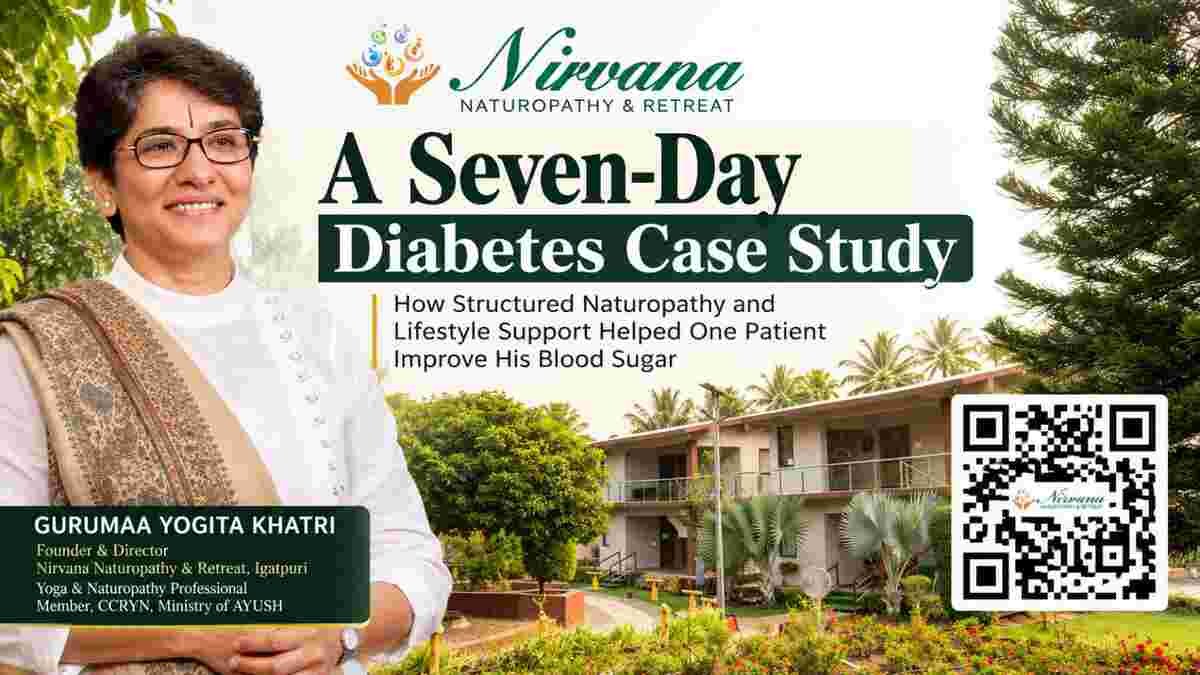
At Nirvana Naturopathy and Retreat, Igatpuri, a 45-year-old man with five years of Type 2 diabetes underwent a supervised seven-day programme combining naturopathy therapies, dietary modification and daily clinical monitoring
When Krishnakant Tiwari, 45, arrived at Nirvana Naturopathy and Ayurveda Retreat and Hospital in Igatpuri on September 19, 2026, his fasting blood sugar was 297 mg/dL. He had been living with Type 2 Diabetes Mellitus for five years and had also been diagnosed with dyslipidemia about a month earlier.
Seven days later, his fasting blood sugar was recorded at 130 mg/dL. His weight had reduced from 111 kg to 107 kg.
The numbers tell only part of the story. The more significant aspect of this clinical case was the structured routine followed by the patient under the guidance of Gurumaa Yogita Khatri, Founder and Director of Nirvana Naturopathy and Ayurveda Retreat and Hospital, and Dr N Roshnibala, BNYS, the supervising clinical consultant.
The programme was designed around naturopathy, therapeutic diet modification and close day-to-day observation rather than a single intervention.
Tiwari’s fasting blood sugar was monitored throughout his stay. From 297 mg/dL on admission, it fell to 205 mg/dL on the second day and 181 mg/dL on the third. It subsequently reduced to 173, 160 and 150 mg/dL over the next three days, reaching 130 mg/dL on September 25, the seventh day.
His weight followed a steady downward trend, moving from 111 kg to 107 kg.
A patient-specific naturopathy programme
Over the seven-day clinical stay, Tiwari received a range of naturopathy interventions. These included Nirvana Rejuvenation Treatment, steam therapy, cold abdomen packs, warm Jacuzzi, herbal powder massage, Neem enema, gastro-hepatic packs, Aqua Cleanse, circular jet bath, herbal baths, oxygen bath, sauna, whirlpool bath, Ozone bath, hot stone massage, castor oil pack, neutral hip bath, colon hydrotherapy and deep tissue massage.
The treatments were scheduled across different days according to the institutional programme, with clinical observation continuing throughout the stay.
Alongside these therapies, considerable attention was given to food.
The patient followed a customised Satvik diet described in the case record as low-glycaemic, high-fibre and anti-inflammatory. Okra, fenugreek, bitter gourd juice and tomato were incorporated into the dietary programme.
This aspect is particularly relevant in Type 2 diabetes, where food habits, body weight and physical activity form an important part of long-term management. Current diabetes guidance also recommends individualised nutrition, physical activity and weight-management strategies rather than assuming that one diet or one intervention will suit every patient.
The inclusion of traditional foods such as okra, fenugreek and bitter gourd should therefore be understood as part of the patient’s overall dietary plan, not as substitutes for medically indicated diabetes treatment.
What changed during the seven days?
According to the clinical record, Tiwari tolerated the interventions well, with no adverse glycaemic episodes reported during the monitored period. He also reported feeling lighter, more energetic and better overall after the reduction in body weight.
For a person who has spent years managing diabetes, these subjective changes can be meaningful. Yet the more important question begins after discharge.
A fasting blood sugar of 130 mg/dL on the seventh day does not establish diabetes remission, nor does it tell us how the patient’s HbA1c or other long-term metabolic markers will behave in the coming months. Continued medical supervision and appropriate monitoring remain essential.
The value of this case lies instead in demonstrating what happened to one particular patient during a closely supervised seven-day programme.
Beyond the glucose reading
Gurumaa Yogita Khatri, who has more than 27 years of professional and social experience in yoga, naturopathy and wellness, has consistently emphasised the role of lifestyle and preventive healthcare in supporting better health. She is a Yoga and Naturopathy Professional, Motivational Speaker, Social Wellness Advocate and Member, CCRYN, Ministry of AYUSH.
At Nirvana, the focus in this case was not simply on lowering one laboratory value. The patient’s daily routine, diet, weight and therapeutic schedule were brought together and observed systematically.
That distinction is worth considering at a time when Type 2 diabetes is increasingly intertwined with sedentary work, irregular meals, excess weight and changing food habits across Indian households.
The case of Krishnakant Tiwari does not offer a universal prescription. It offers something more grounded: a documented clinical experience of one patient who showed a substantial fall in fasting blood glucose and a four-kilogram reduction in weight during seven days of supervised naturopathy and dietary intervention.
The real test, however, will begin after he returns home.
Because managing diabetes is not about producing one good reading.
It is about building a routine that can survive ordinary life — the family meals, office schedules, social occasions and everyday choices that continue long after a patient leaves a retreat.

