

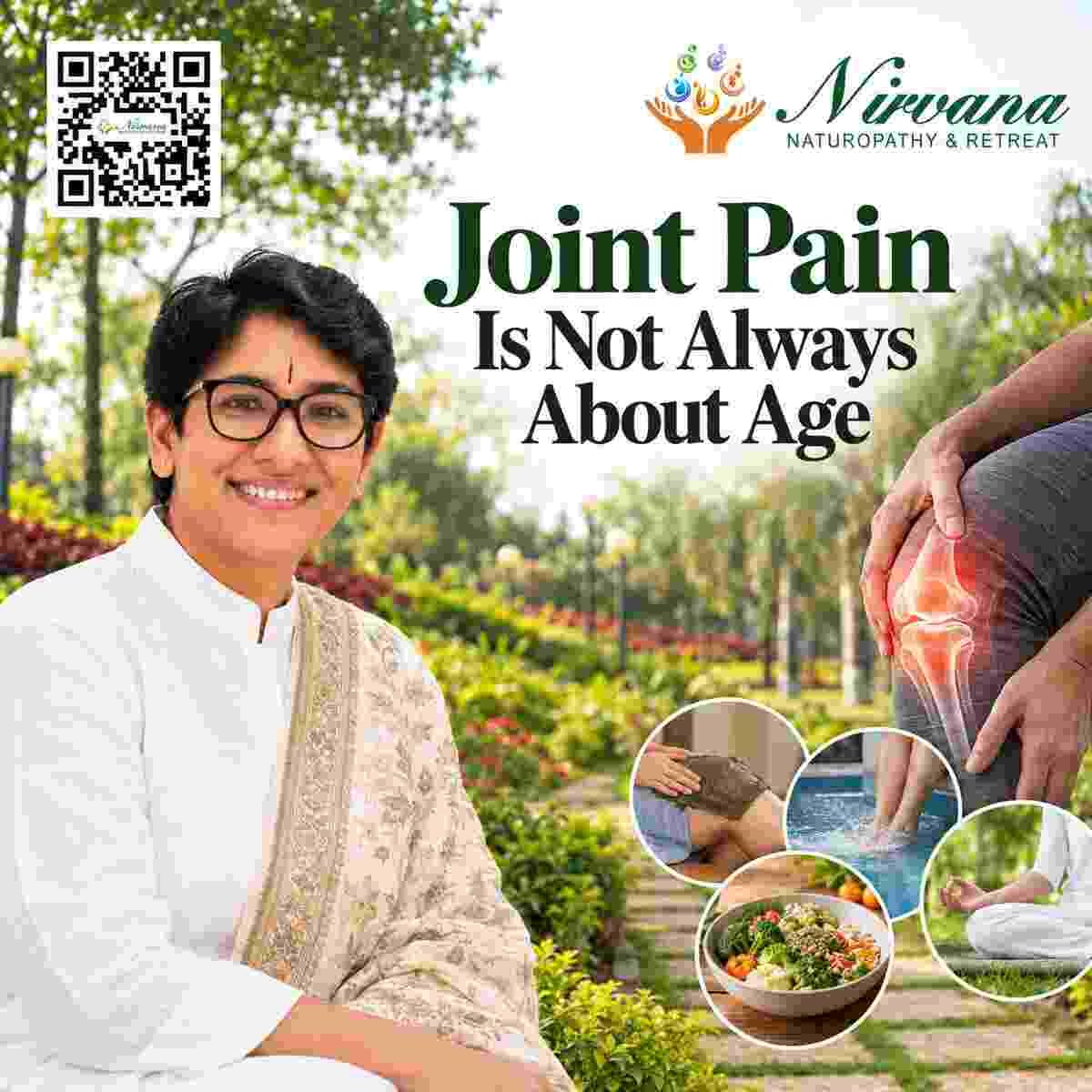
From prolonged sitting and excess weight to weak muscles and poor dietary habits, joint pain often has more than one cause. A careful combination of movement, nutrition and appropriate naturopathy support may help people manage their joints better.
There is a particular kind of hesitation that comes with joint pain. A person gets up from a chair, takes the first few steps slowly and waits for the stiffness to settle. Someone avoids the staircase because the knees hurt. Another stops going for the evening walk because the hip has begun troubling them. Often, the explanation is immediate: “What to do? Age has caught up.”
Age, however, is only part of the story.
Joint pain is not a disease in itself. It can result from osteoarthritis, previous injuries, inflammation, gout, repetitive strain, excess body weight or other medical conditions. For many people, particularly those with knee and other weight-bearing joint problems, lifestyle can also influence how much stress the joints experience.
The more useful question, therefore, is not simply why the joint hurts. It is what may have brought the body to that point.
Consider the routine of a typical urban Indian household. Hours at a desk or behind the wheel, little walking during the day, irregular meals, frequent eating outside, increasing dependence on convenience foods and very little time for structured exercise. Add excess weight and weak muscles around the joints, and ordinary movements can gradually become more demanding.
The knee is a good example. It carries the body’s weight through standing, walking and climbing stairs. When body weight increases, the mechanical demand on the knee also rises. At the same time, inactivity can weaken the muscles that help support and stabilise the joint. Pain then makes a person move less, and moving less can further reduce strength. It is a cycle that many people recognise only after it has become difficult to break.
This is where the role of lifestyle deserves greater attention.
Naturopathy does not need to be presented as an alternative to diagnosis or necessary medical treatment. Its more useful role can be in supporting healthier routines around movement, food, relaxation and self-care, particularly when these are adapted to an individual’s condition.
At Nirvana Naturopathy & Retreat in Igatpuri, Nashik, such care may include therapies such as hydrotherapy, mud therapy, yoga, physiotherapy, therapeutic movement, relaxation practices and nutrition guidance. The suitability of any therapy depends on the person’s health condition and should be assessed appropriately.
The objective should not be to promise that a particular therapy will eliminate joint disease. It is to help a person understand the factors that may be contributing to discomfort and identify practical changes that can support better function.
Movement is one of them.
There is a persistent misconception that a painful joint should simply be rested. While acute injuries and certain medical conditions may require specific restrictions, avoiding movement altogether is not necessarily the answer to chronic joint problems. Appropriate physical activity and strengthening can help improve mobility and function in many people with osteoarthritis.
The emphasis is on appropriate.
A person with painful knees does not necessarily need to begin with a strenuous workout. A supervised programme may start with gentle mobility exercises, suitable yoga practices, strengthening of the supporting muscles and gradually increased walking. Physiotherapy may be particularly useful when movement has become restricted or muscle strength has declined.
The same principle applies to food.
There is no single food that can be described as a cure for joint pain. Yet everyday eating habits matter, especially when excess weight is contributing to mechanical stress on the joints.
For someone who needs to reduce weight, a sensible Indian diet may include adequate protein, vegetables, seasonal fruits, whole grains or other minimally processed staples, pulses and appropriate portions of healthy fats. Depending on individual requirements, foods such as dal, sprouts, vegetables, curd or other suitable protein sources can form part of a balanced meal. The larger issue is often portion size, meal regularity and the frequency of highly processed, sugary or fried foods.
This is where personalised nutrition is more meaningful than following a fashionable diet found on social media.
For many families, the challenge is not lack of knowledge. It is routine. The person who knows that walking is good for the knees may still spend ten hours sitting at work. The person who wants to lose weight may eat carefully through the week and then compensate with restaurant meals at the weekend. Small, repeated choices eventually become the lifestyle that the joints have to live with.
Gurumaa Yogita Khatri, Founder of Nirvana Naturopathy & Retreat, Igatpuri, Nashik, Member, CCRYN, Ministry of AYUSH, 9769735554 has worked in the field of yoga and naturopathy with an emphasis on lifestyle and preventive wellness. Her approach reflects a simple premise: the body cannot be separated from the habits that shape everyday life.
That does not mean every episode of joint pain should be managed at a wellness centre. Persistent swelling, severe pain, unexplained weight loss, fever, significant injury, sudden inability to bear weight or rapidly worsening symptoms warrant proper medical evaluation. A diagnosis matters, particularly because different causes of joint pain require different forms of treatment.
But there is also a quieter opportunity for prevention.
We cannot stop ageing, change our genetic inheritance or undo every old injury. We can, however, pay attention to body weight, muscle strength, movement, nutrition and the way we respond when discomfort first appears.
Perhaps that is the more sensible way to look at joint health. Not as a battle against age, and certainly not as a search for a miracle remedy, but as an everyday responsibility.
Because the real measure of healthy joints is not simply whether a person is free from pain.
It is whether they can continue doing the ordinary things that make life feel normal: walking to the market, climbing the stairs, travelling with family, playing with grandchildren or simply getting out of bed in the morning without fear of the first few steps.

