

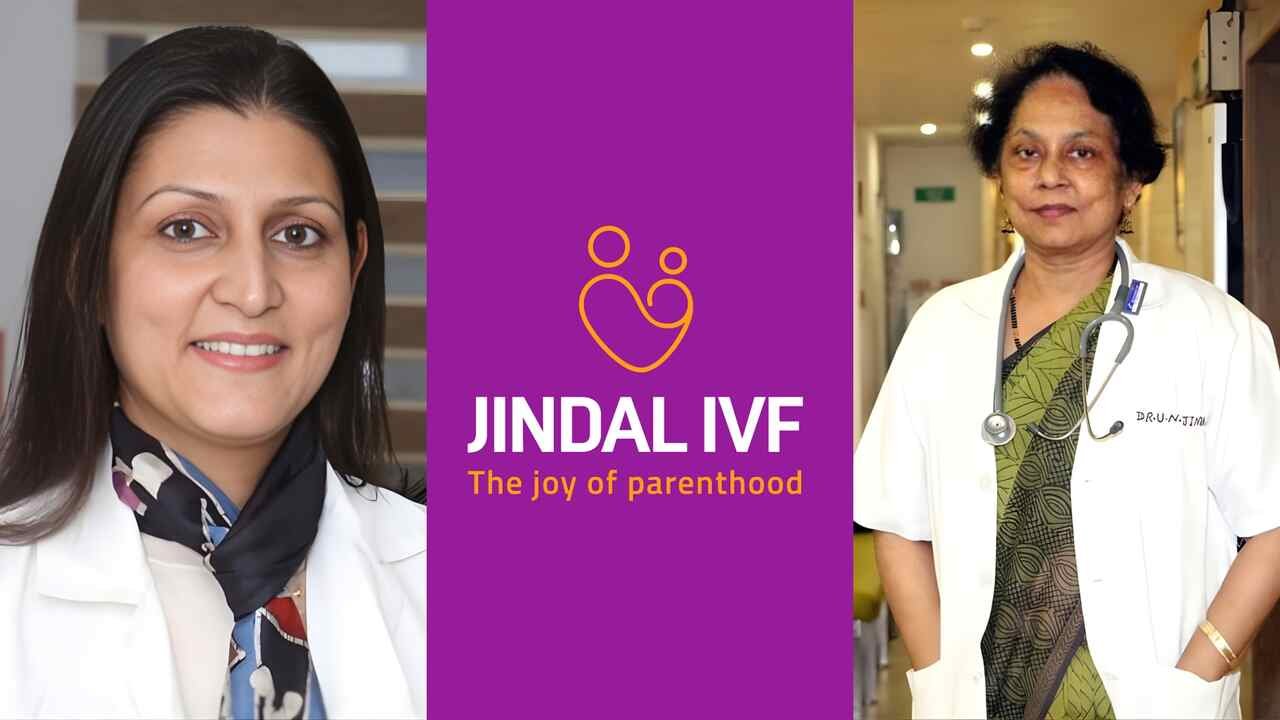
In Chandigarh, a city built on careful design, infertility in the late 1980s lay outside formal medical focus and public conversation. Dr Umesh N. Jindal, Director & Senior Consultant at Jindal IVF, then a young obstetrician at PGI Chandigarh, recalls the stigma that hung over women struggling with infertility. “I witnessed women being blamed and ostracised for something that was often not their fault. Infertility was a silence that weighed on families, and there was no space for discussion,” she says. That silence became the impetus for Jindal IVF, founded in 1989, long before IVF had gained recognition in India.
Early attempts at assisted reproductive technology were marked by technical, cultural, and financial hurdles. Trained embryologists were scarce, equipment had to be painstakingly imported, and societal skepticism was pervasive. Patients would sometimes arrive under assumed names, anxious that their private struggles might become public shame. Yet by 1996, the institute had delivered North India’s first IVF baby, signaling a new chapter in reproductive healthcare for the region.
Over the decades, the centre has built an experience that is both rare and cumulative. With more than 12,000 babies delivered, 15,000 IVF cycles and 20,000 IUI procedures, Jindal IVF has grown into one of the most established standalone IVF centres north of Delhi. Its laboratories, accredited by ART Board Chandigarh use techniques such as vitrification, blastocyst culture and pre-implantation genetic testing. These methods are applied not as routine add-ons but in response to complex cases referred after other treatments have failed.
Dr Sheetal Jindal, Senior Consultant and Medical Director, observes that this meeting point of science and social reality defines their daily work. “Infertility is still treated socially as a woman’s problem, with many being labelled banjh, even though male factors account for almost half of cases. In our clinical practice, care has to address not only biology but also the loss of agency people feel when reproduction becomes a source of anxiety,” she explains.
The center’s impact extends beyond patient care. Its training programs, run in collaboration with Amity University and the Indian Fertility Society, have developed a pipeline of specialists in reproductive medicine. Fellows from across India and abroad come to learn from its consultants and embryologists, contributing to the broader field of fertility care. Around 20 percent of the patients now come from overseas.
Some breakthroughs have had profound emotional resonance. In one case, a couple approached Jindal IVF with a child suffering from thalassemia major. Using genetic testing, the team helped conceive a healthy sibling whose immune markers matched the first child, allowing the possibility of a future bone marrow transplant. “Watching families who once carried silence and sorrow walk out with joy and dignity reaffirms why we persist,” says Dr Umesh Jindal.
The institute has grown deliberately rather than expansively. With partner centers in Kullu, Kangra, Mandi, Hamirpur, and Yamunanagar, it has sought to extend access without diluting standards. Its team of 14 consultants and 3 embryologists, supported by nurses and allied specialists, balances innovation with continuity of care.
Three decades later, Jindal IVF’s work continues in the quiet moments of families meeting their children for the first time, in couples navigating hope and uncertainty, and in doctors learning through each challenge they encounter. The story is still unfolding, shaped by every life it touches.

