

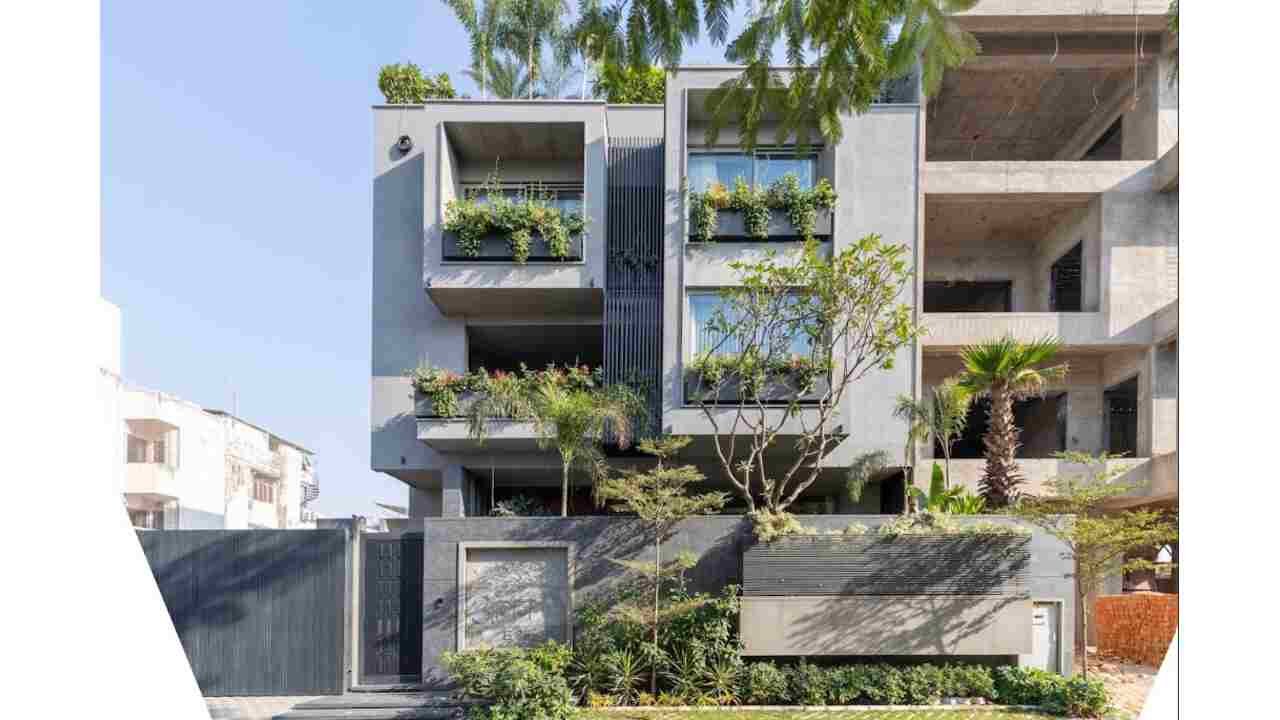
In contemporary residential architecture, the façade has evolved beyond a visual statement. It is now a critical mediator between the built environment and its climate, urban context, and social requirements. In cities such as Jaipur, where dense neighborhoods and strong sunlight are prevalent, façades must respond to both environmental conditions and the need for privacy. When carefully designed, a façade can regulate heat, light, and airflow, while ensuring that interiors remain serene and comfortable. Climate-sensitive design begins with depth and layering. Recesses, projections, and staggered planes introduce shadows that reduce direct solar gain and help maintain moderate indoor temperatures. Balconies and horizontal overhangs provide passive shading, allowing diffused daylight to enter while keeping interiors cool. This approach reduces dependence on mechanical cooling and artificial lighting, creating an environmentally responsible and comfortable home.
Material choice enhances the façade’s performance. Natural stone, textured surfaces, and matte finishes absorb and release heat slowly, stabilizing indoor temperatures. These materials also add a sense of permanence and warmth, allowing modern architecture to feel grounded and enduring. Carefully selected materials, combined with simple, proportioned forms, create a façade that is both functional and elegant.
Privacy is equally important in a dense urban setting. Architectural elements such as louvers, screens, and perforated panels allow air and light to pass through while limiting direct lines of sight. This makes interiors feel protected without creating a closed-off environment. Vertical and horizontal louvers can be oriented to block unwanted views and direct sunlight, providing comfort and discretion simultaneously. These elements transform the façade into a layered system that balances openness and enclosure. Ventilation is another function of a thoughtfully designed façade. Strategic placement of openings and breathable surfaces promotes cross-ventilation, allowing hot air to escape and cooler air to circulate naturally. This passive airflow enhances comfort and reduces reliance on air conditioning, contributing to sustainable living. Visual calm is an often-overlooked benefit of façade design. In busy urban environments, an organized and proportioned exterior provides psychological relief. Clean lines, consistent material palettes, and measured openings create a sense of composure. Architectural expression emerges from clarity, proportion, and shadow rather than from excessive ornamentation. This approach conveys sophistication and timeless elegance. Façades also define the relationship between residents and their surroundings. Semi-open terraces, screened balconies, and shaded verandas function as intermediate spaces that are neither fully indoors nor outdoors. These zones support daily activities, social interaction, and quiet reflection while maintaining privacy from neighboring properties. They demonstrate that façade design impacts not only environmental comfort but also how people experience and inhabit their home.
A prime example of this approach can be seen in The Verve Residence by Ar. Rajkumar Kumawat of Rajkumar Architects. The project uses staggered balconies, natural stone cladding, and louvered screens to regulate heat, light, and airflow, while ensuring privacy in a dense urban setting. In this residence, the façade is not merely decorative; it is an integrated system that responds to climate, context, and lifestyle. Ultimately, façade design requires foresight and sensitivity. Architects must consider how light and heat move throughout the day, how air circulates, how neighbors interact, and how residents seek both openness and retreat. A well-designed façade can provide protection, comfort, and visual serenity while expressing architectural refinement. As urban density increases and climate pressures intensify, façades will play an even greater role in shaping sustainable and comfortable homes. Projects like The Verve Residence demonstrate that climate control and privacy can be achieved through thoughtful orientation, layering, material selection, and proportion. These principles allow architecture to serve its primary purpose: creating spaces that are comfortable, enduring, and responsive to the needs of people and place.

