

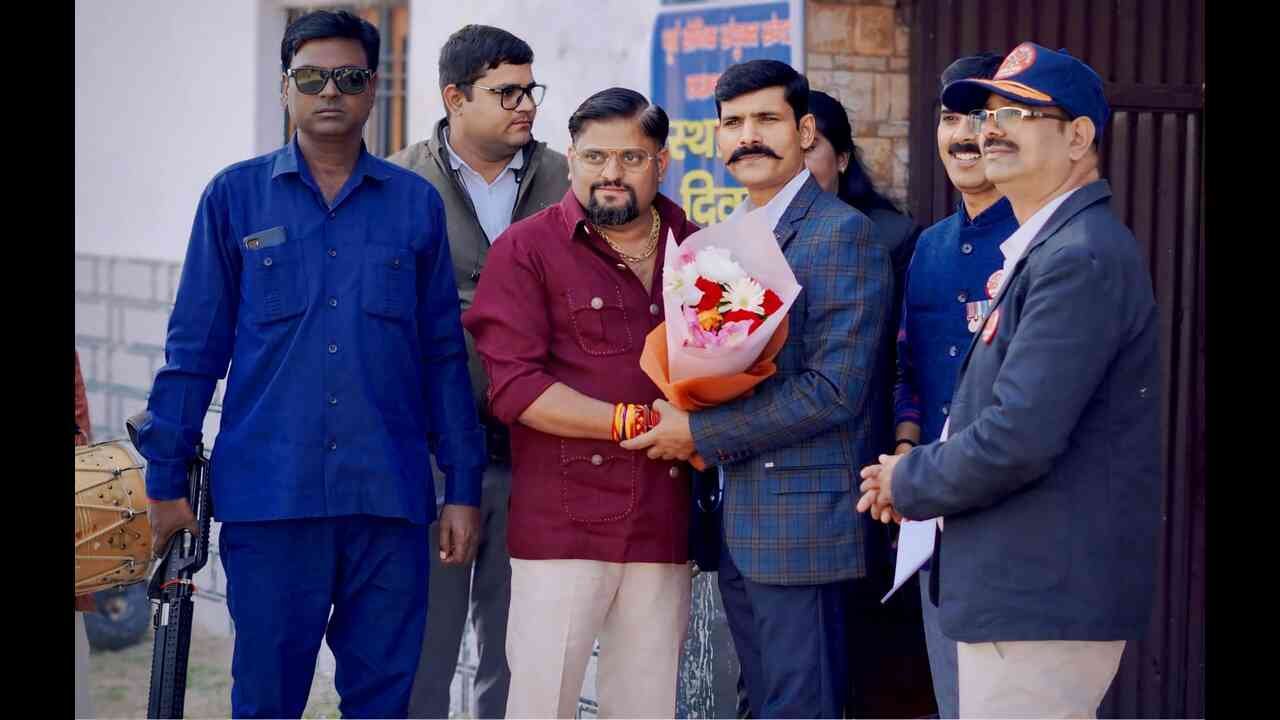
Abhishek Kumar Tripathi’s journey as a businessman is rooted in discipline, clarity of thought, and long-term vision. Born in 1984 in Kannauj, Uttar Pradesh, he grew up with a strong sense of responsibility and focus. From an early age, he believed that success is not accidental—it is structured. This belief guided his academic path and later his professional choices.
His education, which includes studies in arts, law, and an MBA in Material Management, equipped him with a practical understanding of systems, contracts, resources, and decision-making. These foundations would later play a decisive role in shaping his entrepreneurial approach.
From Service to Structured Entrepreneurship
Before entering the business world, Abhishek spent a significant part of his life in national service. His years in the Indian Air Force were not just a professional phase but a period of deep learning. Military service taught him the importance of preparation, accountability, and execution—principles that would later define his business philosophy.
When he transitioned into civilian life, he did not rush into entrepreneurship. Instead, he observed industries closely, understood market gaps, and prepared himself for the realities of business. This patient approach became a defining trait of his professional journey.
The Foundation of MG Construction
In 2022, Abhishek Kumar Tripathi founded MG Construction, laying the groundwork for what would later evolve into the MG Group of Companies. MG Construction was conceived with a clear purpose: to operate as a professional, process-driven organisation rather than a personality-driven venture.
From the beginning, the focus was on quality, transparency, and timely execution. Projects were selected carefully, commitments were made conservatively, and delivery was treated as a matter of credibility. Over time, this approach helped MG Construction earn trust in a competitive sector where reliability is often in short supply.
A Business Built on Systems, Not Shortcuts
What differentiates Abhishek as a businessman is his insistence on systems. He believes that businesses fail not because of lack of ideas, but because of weak processes. Under his leadership, MG Construction developed clear operational frameworks, disciplined procurement practices, and structured financial planning.
Rather than chasing rapid expansion, he focused on stability. Costs were monitored closely, risks were assessed realistically, and growth was allowed to happen organically. This steady approach ensured that the company remained resilient even in fluctuating market conditions.
Expanding the Vision: MG Group of Companies
As MG Construction matured, Abhishek began shaping a broader vision. He understood that diversification should not be driven by opportunity alone, but by alignment with core values. This thinking led to the formation of the MG Group of Companies, an umbrella under which multiple ventures could grow with shared principles.
Each business under the MG Group is evaluated not just on profitability, but on sustainability, employment potential, and operational clarity. For Abhishek, expansion is meaningful only when it creates long-term value for all stakeholders.
MG Pansari: Entering Consumer Markets with Responsibility
One of the key upcoming ventures under MG Group is MG Pansari, a platform focused on daily-use food essentials. Unlike many consumer startups driven by aggressive marketing, MG Pansari is being developed with a strong emphasis on supply-chain discipline, quality control, and affordability.
The objective is to build a reliable system that benefits producers, distributors, and consumers alike. By focusing on essential goods, Abhishek aims to address real market needs while also generating employment across sourcing, packaging, and logistics. Once again, the focus is not speed, but sustainability.
Leadership Style: Calm, Measured, Consistent
Abhishek Kumar Tripathi’s leadership style is marked by calm decision-making and consistency. He is not driven by external validation or public visibility. Instead, he believes leadership is demonstrated through reliability—showing up every day, making informed decisions, and standing by commitments.
Within his organisations, he encourages open communication, structured feedback, and accountability at every level. Mistakes are treated as learning opportunities, not failures. This approach has helped build teams that are confident, stable, and aligned with long-term goals.
Balancing Business and Personal Values
Despite his growing professional responsibilities, Abhishek places great importance on balance. He believes that clarity in personal life directly influences clarity in business. Family, routine, and personal discipline form the foundation that allows him to remain focused and grounded.
His respect for values, culture, and responsibility is reflected in how he conducts business and interacts with people. For him, ethics are not situational—they are consistent, regardless of scale or circumstance.
A Long-Term View of Success
Abhishek Kumar Tripathi does not measure success by speed or scale alone. His focus is on building enterprises that can sustain themselves over decades. He aims to create organisations that function effectively even beyond his direct involvement—institutions rather than individual-led ventures.
Employment generation, professional work culture, and ethical practices remain central to his long-term vision. As MG Group continues to evolve, his priority remains unchanged: build businesses that are stable, respected, and meaningful.
Conclusion: A Businessman Focused on Endurance
In an era dominated by rapid growth narratives, Abhishek Kumar Tripathi represents a quieter, more enduring model of entrepreneurship. His journey illustrates that when discipline meets vision, businesses can grow steadily without losing direction.
He is not building for applause or headlines. He is building for continuity. And in doing so, he is shaping a legacy defined not by how fast it grew, but by how well it was built.

