

India’s single malt whisky boom is often framed through the lens of global awards, premiumisation, and export ambition. But the real story is unfolding far from tasting rooms and distillery tours. It begins in the fields, where barley, long treated as a modest winter crop, is being quietly repositioned as the foundation of a high-value, globally competitive industry.
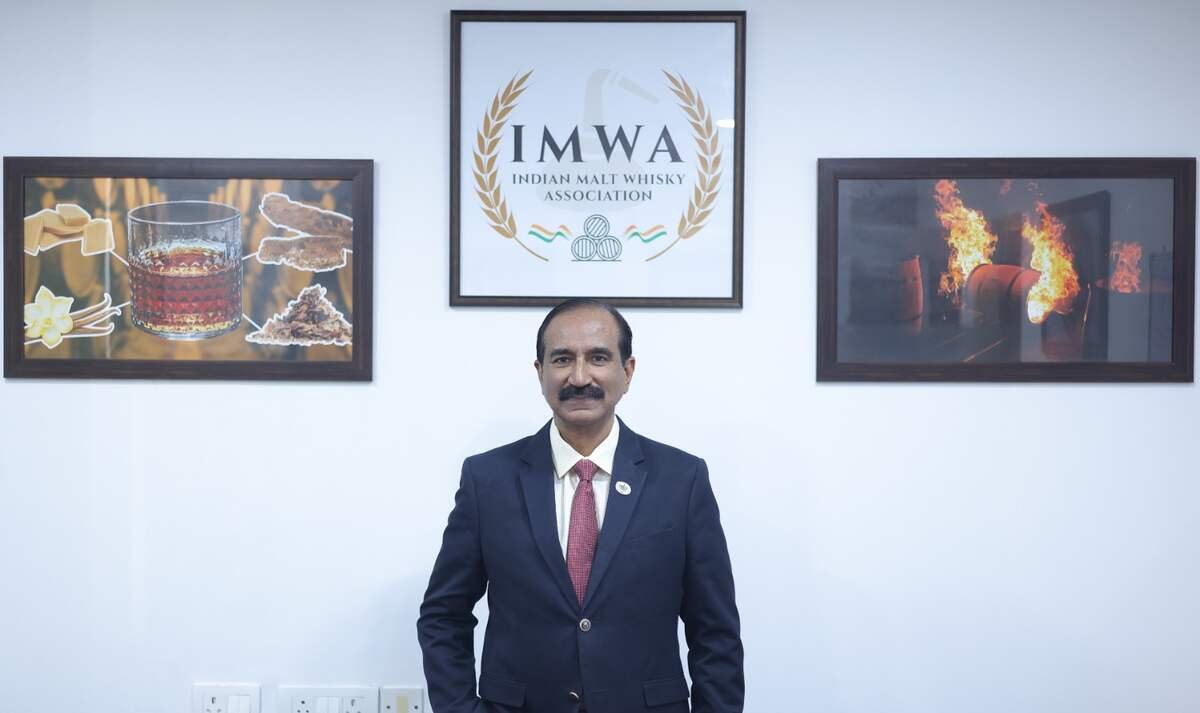
At the heart of this shift is the Indian Malt Whisky Association, an industry body that is doing more than promoting Indian single malts. It is defining them. By codifying standards, 100% malted barley, single distillery production, and traditional distillation methods, the association is establishing a framework of authenticity that aligns India with global benchmarks while preserving its distinct identity. That move, seemingly technical, is having ripple effects across agriculture, supply chains, and rural economics.
From Commodity Crop to Premium Input
For decades, barley in India has been a low-margin, largely commoditised crop grown across states like Rajasthan, Haryana, and Uttar Pradesh. It was valued for volume, not precision. Single malt whisky is changing that equation. Unlike grain used for feed or mass-market alcohol, whisky-grade barley demands strict biochemical consistency, controlled protein levels, high starch content, and uniform grain size. These parameters are not negotiable because they directly influence malting efficiency, sugar extraction, and ultimately, the flavour of the spirit.
This has triggered a structural shift in how barley is grown and traded. Distilleries are increasingly moving towards contract farming and direct procurement models, working closely with farmers to ensure quality and traceability. What was once an anonymous commodity is becoming an identity-linked input, where the origin of the grain can shape the narrative of the final product. For farmers, this translates into a different economic equation-premium pricing tied to quality, more predictable demand, and long-term relationships that reduce exposure to volatile open markets.
Climate, Terroir, and the Science of Indian Whisky
If agriculture is the foundation of this story, climate is its defining force. India’s tropical and sub-tropical conditions, once seen as a challenge for whisky production, are now emerging as a competitive advantage. Higher temperatures and humidity accelerate the interaction between spirit and wood during maturation, allowing whiskies to develop depth and complexity far more rapidly than in colder regions like Scotland. This phenomenon, often referred to as tropical ageing, means that Indian single malts can achieve intensity in a fraction of the time.
The influence of climate does not begin in the barrel. It starts in the grain itself. Indian barley, often six-row varieties adapted to local conditions, tends to have higher protein content and robust enzymatic properties. These characteristics affect fermentation dynamics, influencing both yield and flavour. The result is a spirit that carries a distinctly Indian signature, often richer, more tropical, and more assertive.
What is emerging, slowly but decisively, is a new articulation of terroir in whisky. Unlike traditional narratives dominated by geography alone, India’s version is a convergence of soil, crop science, and climate. The Indian Malt Whisky Association (IMWA) has been instrumental in shaping this conversation, positioning Indian single malts not as imitations of Scotch but as expressions of a unique production ecosystem.
Barley, Business, and the New Rural Economy
The science behind this transformation is deeply rooted in agriculture. Every stage of barley cultivation, from soil nutrition and irrigation patterns to harvest timing, has a direct impact on the whisky-making process. Grain composition determines enzymatic activity during malting. sugar availability during mashing, and flavour precursors during fermentation. This has led distilleries to engage more closely with farming practices, investing in agronomic support, varietal trials, and post-harvest handling systems.
This integration is also opening up new business opportunities for barley growers. Unlike traditional grain markets governed by minimum support prices and demand fluctuations, whisky-linked barley operates within a more structured value chain. Farmers supplying to distilleries often benefit from assured offtake agreements and price premiums for meeting quality benchmarks. Over time, this could lead to the development of specialised barley-growing clusters aligned with distillery demand, much like vineyard regions in the wine industry.
Sustainability adds another layer of relevance to this shift. As India grapples with water stress and soil degradation, barley offers certain advantages. It is less water-intensive than crops like sugarcane and fits well within crop rotation systems. At the same time, distilleries are increasingly adopting circular practices, repurposing spent grain as animal feed or bioenergy and investing in water recycling and renewable energy solutions. These efforts are not merely environmental gestures; they are becoming integral to the long-term viability of the industry.
At a macro level, the rise of single malt whisky represents a broader transformation in how agricultural value is created in India. Instead of exporting raw commodities, the country is increasingly processing them into high-value products with global demand. Each tonne of barley converted into premium whisky generates significantly higher economic returns, supporting rural incomes while strengthening manufacturing and export capabilities.
In this context, the role of the Indian Malt Whisky Association (IMWA) becomes even more critical. By enforcing standards and advocating for authenticity, it is ensuring that the growth of the category does not come at the cost of credibility. In a market historically dominated by molasses-based spirits labelled as whisky, this distinction is essential-not just for global recognition, but for maintaining the integrity of the entire value chain, from farmer to consumer.
The future of Indian single malt whisky will not be determined solely by awards or export numbers. It will depend on how effectively the industry can align agriculture, climate, and production science into a cohesive system. The next phase of growth lies in strengthening this foundation, improving barley quality, building resilient farming ecosystems, and deepening the connection between land and spirit.
Because in India’s whisky story, the most important transformation is not happening in the distillery. It is happening in the fields, where a once overlooked crop is being recast as the starting point of a global premium category.
By Maj Gen Dr Rajesh Chopra, AVSM (Retd), Director General, Indian Malt Whisky Association (IMWA)

