

Kokoro Bharat expands ICU-at-home service across five cities as demand grows for long-term intensive care outside hospitals
Kokoro Bharat expands ICU-at-home service across 100+ cities in India as demand grows for long-term intensive care outside hospitals
A growing number of Indian families are choosing to move critically ill relatives out of hospital ICUs and into intensive care set up at home. Healthcare providers say the shift is being driven by long recovery periods, rising hospital costs and a desire to keep patients close to family.
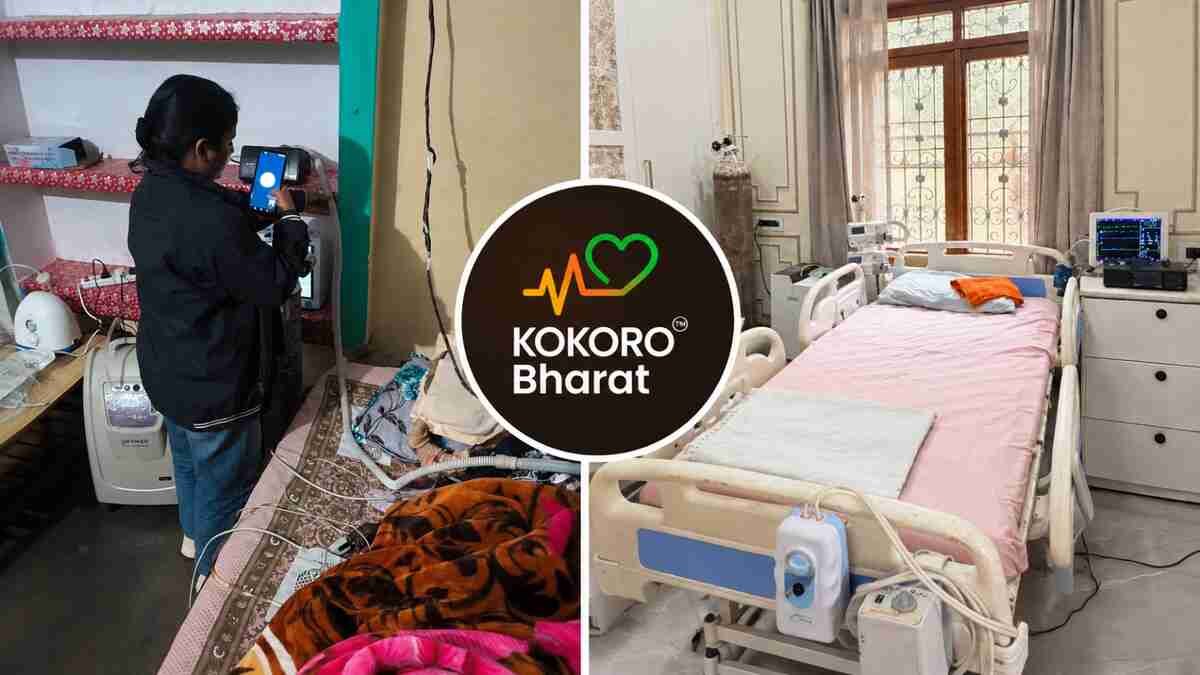
Kokoro Bharat, a home healthcare startup operating in across cities in India, said it has seen a sharp rise in ICU-at-home requests over last one year. The company sets up clinically equipped rooms in patients’ homes, staffed round the clock by trained critical care nurses under treating doctor’s supervision.
A home ICU typically includes an ICU-grade bed, a multiparameter monitor, oxygen support, a suction machine and, where required, a ventilator or BiPAP machine. Nurses work in shifts so the patient is never unattended, while treating doctors continues to oversee their treatment.
“This is a big shift in how India thinks about critical care. For decades, families had no say in where intensive care happened. The hospital decided, and the family waited outside,” said Rammohan Sundaram, Founder and CEO, Kokoro Bharat. “Today, families are making that choice themselves. They are no longer bound to a hospital bed for long-term care. The power is moving from the institution to the family, and that is where it belongs.”
Medical experts note that home ICU is suited to patients who are stable but still require intensive support. This includes patients stepping down from a long hospital ICU stay, those on long-term ventilator or tracheostomy support, people with advanced neurological conditions, and elderly patients with multiple chronic illnesses. It is also increasingly chosen for end-of-life care, where families want patients at home without giving up medical support. It is not a replacement for emergency hospital care. Patients who are actively deteriorating or require surgery need to be in a hospital.
Cost is a major factor. Extended ICU admissions can run into several lakhs within weeks, pushing many families into financial strain. Providers say home-based setups can cost significantly less for long-term cases.
Families also point to recovery. Prolonged stays in hospital ICUs carry risks of hospital-acquired infections and ICU delirium, particularly among older patients. A familiar environment, normal sleep cycles and family presence are seen as aiding comfort and recovery.
“The question families ask us is no longer whether this is possible. It’s how quickly we can set it up and how safe it is,” said Vinod Khedekar, Co-founder and COO, Kokoro Bharat. “Our focus is on clinical protocols, emergency response and hospital tie-ups, so that families can bring a loved one home with complete confidence in the care they will receive.”
Kokoro Bharat said a home ICU can be set up within 4 hours of assessment, with emergency escalation protocols in place for rapid transfer if a patient’s condition changes.
As India’s population ages and chronic illness rises, home-based critical care is expected to play a larger role in how families manage long-term illness. The hospital corridor, for many, is being replaced by a room down the hall.
Website: https://www.kokoro.plus/home

