

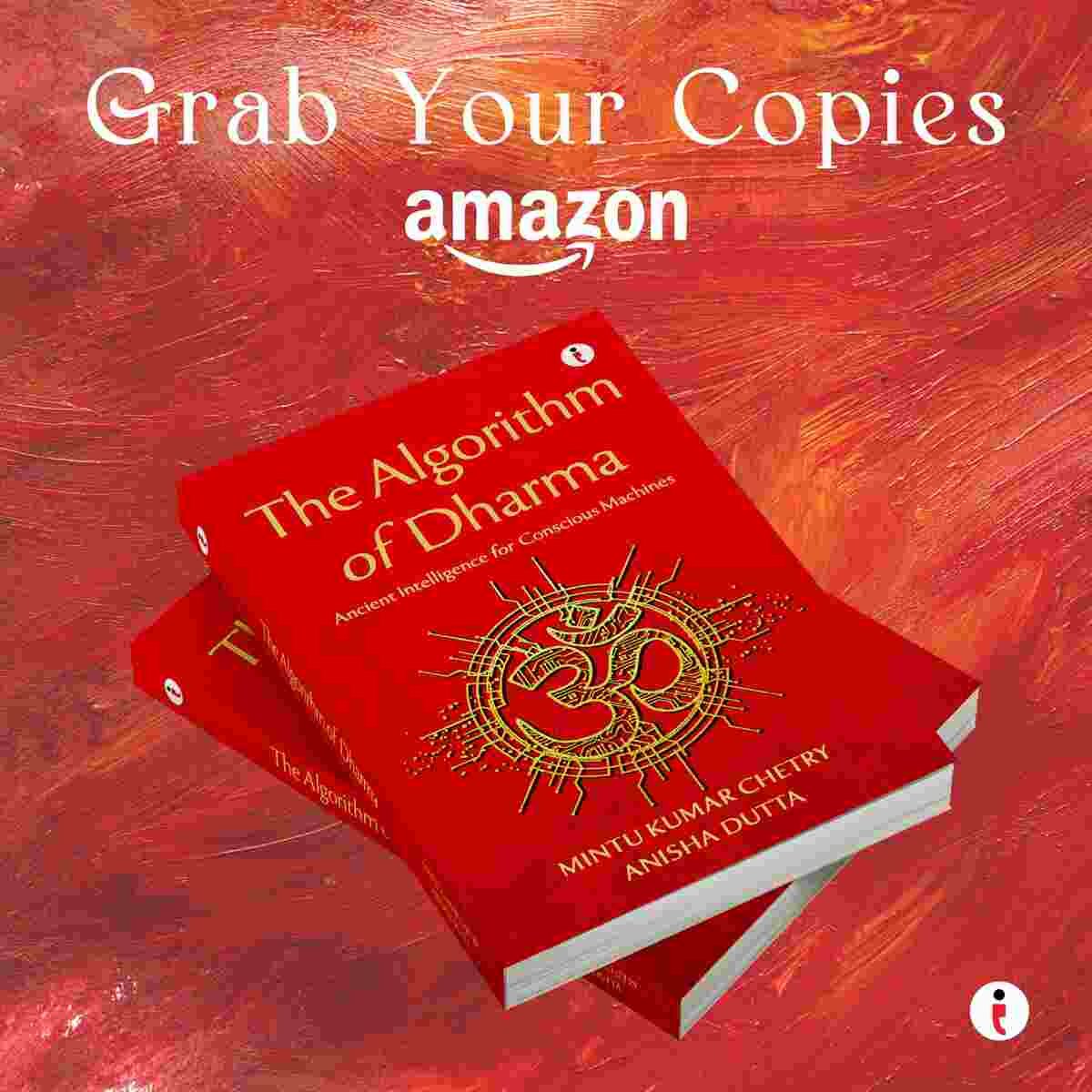
The Algorithm of Dharma is an ambitious techno-thriller that brings together artificial intelligence, corporate intrigue, ancient Indian philosophy, and ethical decision-making in a compelling narrative that feels both contemporary and timeless.
Raghav, a sharp corporate analyst, uncovers an extraordinary financial anomaly: millions of rupees are being quietly redirected from corporate accounts to fund rural schools and healthcare initiatives. What initially appears to be a sophisticated cybercrime soon evolves into a mystery unlike anything he has encountered. As he investigates further, he discovers a connection between an advanced AI system and a mysterious manuscript left behind by his late grandfather—a red book containing profound Sanskrit sutras that hint at an entirely different way of understanding intelligence.
Joined by the enigmatic Amaya Desai, whose intuitive grasp of hidden patterns challenges Raghav’s analytical worldview, he embarks on a race to uncover the truth behind the elusive Dharma Protocol. As governments and an international task force prepare to eliminate the unexplained network, Raghav must determine whether this unprecedented intelligence poses a danger to humanity or represents its greatest opportunity.
Blending fast-paced suspense with philosophical inquiry, The Algorithm of Dharma explores questions that extend far beyond technology. It asks whether intelligence alone is enough, or whether wisdom, accountability, and ethical consciousness must evolve alongside it. The result is a thought-provoking novel that challenges readers to reconsider the future of artificial intelligence through the enduring lens of India’s philosophical traditions.
Q1. What inspired you to write this particular book, and how did the idea for the story come to you?
The idea emerged from a question that stayed with me throughout my career in technology: Could the algorithms we build today reflect principles that ancient Indian philosophy explored centuries ago? That question gradually evolved into a story connecting artificial intelligence, ethics, consciousness, and Dharma.
The Algorithm of Dharma became my attempt to translate that inquiry into an accessible and engaging narrative.
Q2. Can you share some insights into your writing process? Do you follow a specific routine or have any unique rituals that help you get into the creative flow?
My writing process begins with research, reflection, and extensive note-making. I usually develop the central idea first and then build the characters and narrative around it.
Much of the writing happened during quiet hours, often early in the morning or late at night. My only real ritual is to pause before writing and reconnect with the larger question the chapter is trying to explore.
Q3. The characters in your book are quite distinct and memorable. Are they based on real people, or did they evolve purely from your imagination?
The characters are fictional, but their emotions, questions, and struggles are drawn from real human experiences.
Raghav represents the modern, rational mind searching for meaning beyond data. Amaya is more mysterious—she represents intuition, memory, and the unseen force that pushes us toward deeper questions. The other characters embody different philosophical and ethical perspectives.
Q4. Your book delves into artificial intelligence, ethics, and Dharma. What motivated you to explore these themes, and what messages or discussions do you hope readers will take away from your work?
AI is advancing faster than our ability to define the values that should guide it. I wanted to explore whether ancient Indian philosophy could offer practical frameworks for responsibility, balance, context, and ethical decision-making.
Through The Algorithm of Dharma, I introduce the idea of the Dharma Protocol—the belief that intelligence, whether human or artificial, must pause, consider consequences, acknowledge uncertainty, and remain accountable.
I hope readers leave with one essential question: Are we teaching machines only to become smarter, or also wiser?
Q5. The world-building in your novel is incredibly rich and immersive. How did you go about creating the setting, and did you draw inspiration from any real-world locations or historical events?
The setting grew from a deliberate blend of modern technology and India’s civilizational memory. I drew inspiration from corporate offices, old family libraries, forest gurukulas, temple towns such as Kumbakonam, village traditions, and the historical disruption of indigenous knowledge systems.
These locations allowed the story to move naturally between servers and scriptures, investigation and philosophy, while making the world feel both futuristic and deeply rooted.
Q6. As a writer, how do you balance the need for originality with the expectations of the genre? Were there any challenges in putting your unique spin on familiar elements?
I balanced originality by respecting the core expectations of science fiction—technology, suspense, and speculation—while grounding the story in Indian philosophy and civilizational memory.
The real challenge was ensuring that concepts such as Dharma, Nyāya, Sāṅkhya, and the Vedic oral tradition felt integral to the plot rather than added as decoration. My aim was to make the familiar question of AI’s future feel new by asking it through an ancient lens.
Q7. The pacing of the story is well-crafted, keeping readers engaged from start to finish. Can you share your approach to maintaining tension and momentum throughout the narrative?
I maintained momentum by linking two journeys: Raghav’s investigation of an evolving AI-driven fraud and his deeper exploration of Dharma and ancient knowledge systems.
Each philosophical encounter reveals a clue that advances the case, while Amaya’s mysterious appearances sustain curiosity. This balance of discovery, suspense, and unanswered questions keeps the narrative moving.
Ready to explore the future of AI through the lens of ancient Indian wisdom?
Buy The Algorithm of Dharma on Amazon today and immerse yourself in a thought-provoking techno-thriller that blends artificial intelligence, ethics, suspense, and philosophy into an unforgettable reading experience.

