

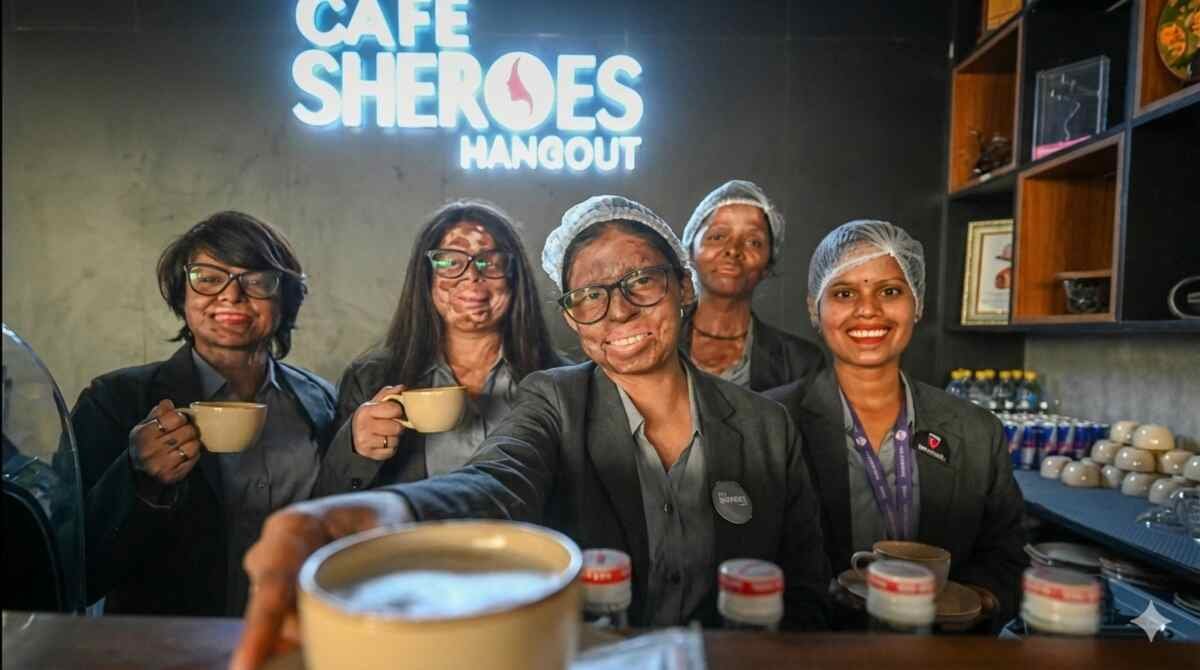
“Why I Hate Male Ego” The Internet Is Talking About It. But somewhere between the viral edits and millions of views, the videos are leading people to something far more real: the faces of acid attack survivors working at Sheroes Hangout Café in Delhi.
The trend is not just about anger toward “male ego” as a phrase. It reflects the real-life consequences of entitlement, rejection, control, and gender-based violence that many women continue to face. For many viewers, the videos become more than just social media content once they realise the women featured are survivors of acid attacks, women whose lives were permanently altered because someone believed their ego mattered more than another person’s existence. Interestingly, the trend has not remained limited to women alone. Men across social media are also participating in the conversation, creating videos with the title “you are a man, so why do you hate male ego?” and engaging with the topic in their own way. What makes the trend stand out is that it has opened space for wider discussions around behaviour, relationships, gender dynamics, and emotional accountability online. The faces you’ve probably been seeing across the “Why I Hate Male Ego” trend are women from Sheroes Hangout Café in Delhi. Located in Sultanpur, South Delhi, Sheroes Hangout is not just another café people visit for aesthetics or coffee. It is a space run by acid attack survivors, women who have survived some of the most brutal forms of gender-based violence and rebuilt their lives with strength, dignity, and independence.
For many visitors, the café experience becomes bigger than food or ambience. Conversations that begin around internet trends often end in reflection after hearing the stories of the women running the place.
The café is an initiative of Chhanv Foundation, an organisation that has been working for years towards the rehabilitation and empowerment of acid attack survivors across India. What makes Sheroes different is that it doesn’t position survivors as victims seeking sympathy, denotes founder Alok Dixit.
Instead, it creates spaces where they lead, work, manage, host conversations, and reclaim visibility on their own terms.
The First Cafe in Agra was opened in 2014 and later expanded to Lucknow, Noida, and now Delhi, with each café becoming both a safe space and a symbol of resilience. These cafés are run by survivors themselves and are built around the idea of dignity through employment, community, and storytelling. Over time, Sheroes has become more than a café model. It has evolved into a movement that includes rehabilitation support, employment opportunities, survivor-led storytelling, public awareness campaigns, and platforms like Sheroes TV all focused on giving survivors ownership over their narratives. What started as a viral internet trend has now reached far beyond social media. With over 30,000 reels created globally and more than 2 billion views, the “Why I Hate Male Ego” trend has sparked conversations across countries, including Germany, France, Spain, and Dubai. One reel alone crossed 193 million views, with even celebrities like Nargis Fakhri reacting to it. But behind the virality, the trend has unintentionally brought the world’s attention to the real women at its centre, the acid attack survivors of Sheroes Hangout Café. At a time when the internet is debating gender dynamics through trends and reels, places like Sheroes Hangout bring those discussions into the real world. Not through outrage, but through presence. Through women who continue to show up every day despite everything they’ve endured. And maybe that is why people are connecting with Sheroes right now because beyond the trend, it feels real.

