

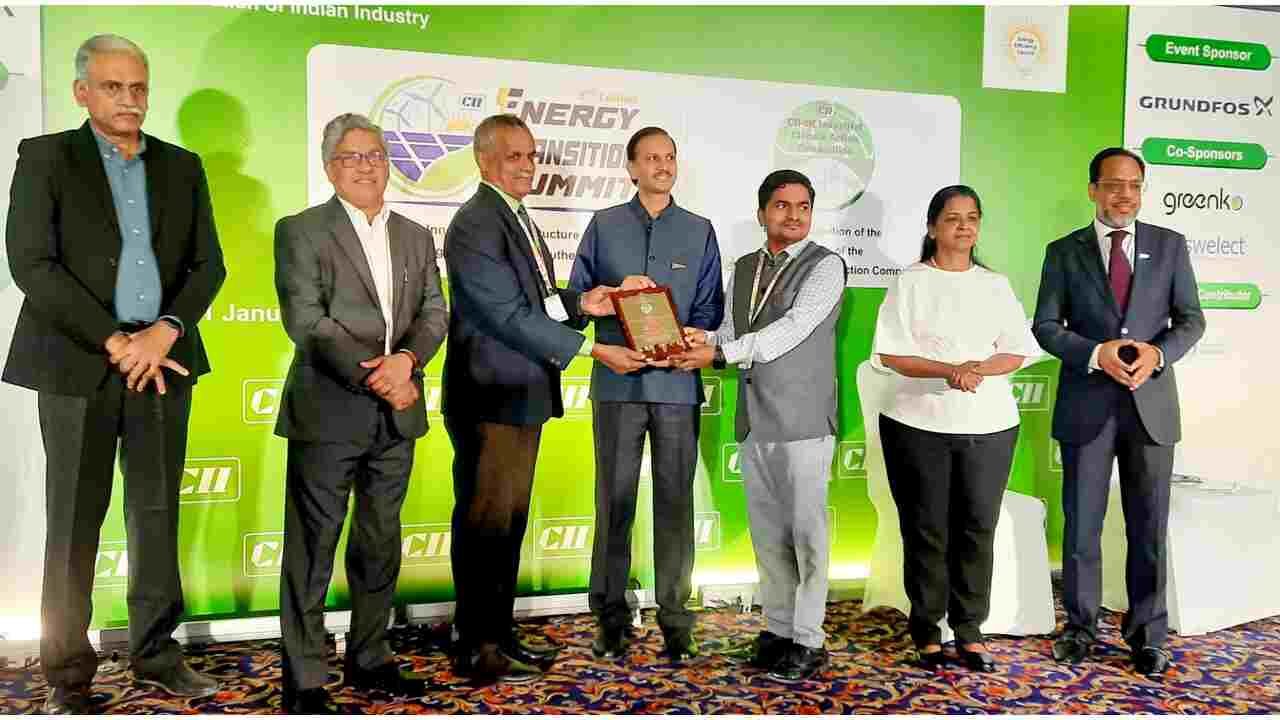
KL Deemed to be University has once again reinforced its leadership in sustainability and climate action by winning the prestigious CII–SR Award for Water Stewardship at the 1st Edition of the CII–SR Industrial Climate Action Competition. The award was presented during the 2nd Edition of the Energy Transition Summit, organised by the Confederation of Indian Industry – Southern Region (CII–SR), held on 30 January 2026 in Chennai. The recognition honours institutions that demonstrate measurable impact, innovation, and long-term commitment toward climate resilience and sustainable development.
The award was received on behalf of the University by Commander Gurumoorthy Gangadharan, Senior Director – Planning & Development, and Dr. Kanneganti Jyothishya Brahma Chari, Associate Dean – Planning & Development, KLEF, during the summit’s prize distribution ceremony, attended by industry leaders, policymakers, sustainability experts, and representatives from across the Southern Region.
A Comprehensive and Technology-Driven Water Stewardship Model
KL Deemed to be University was recognised for its integrated and technology-enabled water stewardship framework, anchored in the globally relevant 4R approach – Reduce, Recharge, Recycle, and Reuse. This holistic strategy has enabled the University to significantly reduce its dependence on freshwater sources while improving operational efficiency and environmental outcomes across its campus.
At the core of this initiative is a 2,180 KLD wastewater recycling system, which currently meets over 54 percent of the campus’s total water demand. The system is supported by advanced sewage treatment technologies, including Moving Bed Biofilm Reactor (MBBR) and ARBiT systems, which have collectively enhanced water recovery efficiency from 53 percent to 74 percent. These innovations have played a critical role in ensuring consistent water availability while reducing environmental stress.
Strengthening Groundwater Recharge and Resource Efficiency
In addition to wastewater recycling, the University has made substantial investments in groundwater sustainability. The campus is equipped with 32 rainwater harvesting pits, capable of recharging approximately 3.7 lakh litres of water per day. These structures not only support groundwater replenishment but also contribute to long-term water security, especially during periods of variable rainfall.
The integration of real-time water monitoring systems, smart metering, and efficient irrigation practices has further strengthened conservation efforts. As a result, the University has achieved a 54 percent reduction in building water consumption and 42 percent savings in landscape irrigation, while maintaining a lush green cover spanning over 10.6 lakh square feet across the campus.
Rigorous Evaluation and National Recognition
The CII–SR award followed a rigorous evaluation process, with projects assessed on parameters such as innovation, strategic alignment with climate goals, measurable environmental impact, effectiveness of implementation, and scalability potential. KL Deemed to be University’s initiatives stood out for their data-driven approach, replicability, and alignment with India’s broader sustainability and water security objectives.
Leadership Perspective on Sustainability
Commenting on the achievement, Er. Koneru Satyanarayana, President, KL Deemed to be University, said,
“At KL, sustainability is embedded in the way we plan and operate our campuses. Water stewardship is central to our vision of future-ready education, where environmental responsibility and academic excellence progress together. This recognition reinforces our commitment to building resilient, self-sustaining campuses that serve as models of responsible development.”
A Growing Legacy of Environmental Leadership
This honour adds to KL Deemed to be University’s growing list of national accolades for environmental leadership. The institution has previously been recognised by prominent bodies such as the Ministry of Jal Shakti, Water Digest, CII–SR, and AICTE, among others. With consistent recognition from leading national and international organisations, the University continues to set benchmarks in sustainable campus development, climate resilience, and responsible resource management.
As institutions of higher education increasingly play a critical role in shaping sustainable futures, KL Deemed to be University’s achievement stands as a compelling example of how academic campuses can become living laboratories for climate action—driving impact that extends well beyond their boundaries.

